


1. INTRODUCTION
1.1. Types of heat exchangers
CONCENTRIC TUBES OR DOUBLE TUBE
Below are the operation of a heat exchanger concentric tubes or double tube:
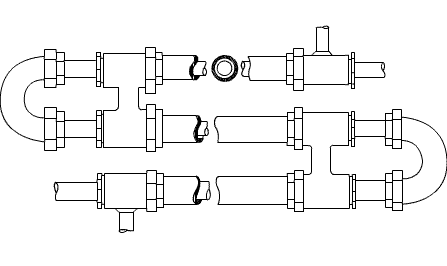
The heat exchanger concentric tubes or double tube are simpler there. It consists of two concentric tubes of different diameters. One fluid flows inside the tube of smaller diameter and the other fluid flows through the annular space between the two tubes.
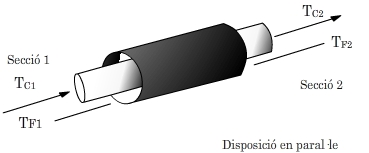
There are two possible configurations with respect to the direction of fluid flow: upstream and in parallel. To counter the two fluids enter the opposite ends and flow in opposite directions, whereas in parallel flow and enter the same end in the same direction. Below you can see two images with two possible configurations of fluid within the tubes.

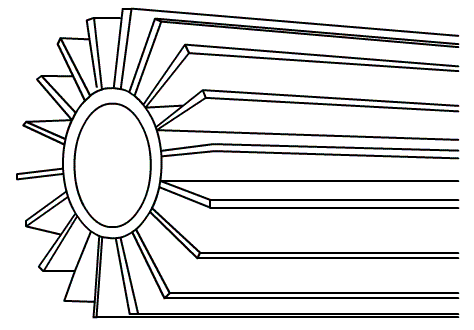
The heat exchanger concentric tubes or double tube can be plain or aletejats. Aletejats tubes used when the coefficient of heat transfer of fluids is much smaller than the other. The result is extended outside the area, this being greater than the area inside.
The finned tube cross represented then used when the direction of flow is perpendicular to the tube.
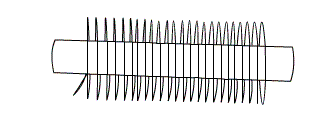
However, when the direction of flow of fluid is parallel to the axis of the tubes, finned tube is longitudinal:
An application of double-tube heat exchanger is used to cool or heat a solution tank and coil (Clicking the button 1, the image can be seen in motion):
In this case the steam enters shirt (red bubbles in the drawing) that heat the solution. As cold water enters coil (blue in the drawing) that lowers the temperature of the reactor and also to lower the temperature, controls the reaction occurs.