3. CÁLCULO INTERCAMBIADORES DE CALOR DE TUBOS CONCÉNTRICOS
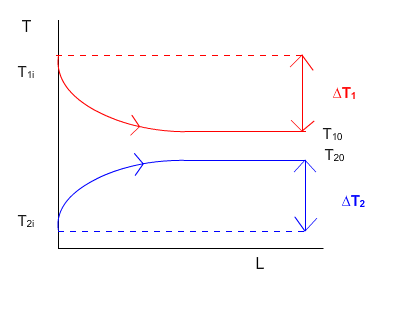
3.5. DIAGRAMAS DE DISTRIBUCIÓN DE TEMPERATURA
Las ecuaciones de balance térmico son las siguientes:
q = W1 · Cp1 · (T1i -T10) = C1·∆T1
q = W2 · Cp2 · (T20 - T2i) = C2·∆T2
Donde (con unidades del Sistema Internacional (SI)):
q = calor que se transmite de un fluido a otro (J/s)
W1 = caudal másico del fluido caliente (1) (Kg/s)
W2 = caudal másico del fluido frío (2) (Kg/s)
Cp1= capacidad calorífica del fluido caliente (1) (J/Kg·K)
Cp2 = capacidad calorífica del fluido frío (2) (J/Kg·K)
T1i= temperatura inicial del fluido caliente (1) (K)
T10 = temperatura final del fluido caliente (1) (K)
T 2i = temperatura inicial del fluido frío (2) (K)
T20 = temperatura final del fluido frío (2) (K)
Donde C1 y C2 son capacidades caloríficas totales:
C1= W1 · Cp1
C2= W2 · Cp2
|
(1)
(2)
(11)
(12)
|
Si se igualan las ecuaciones (1) y (2) :

|
(13) |
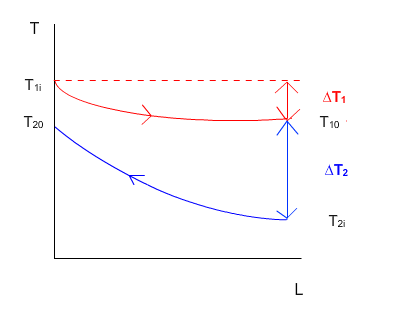
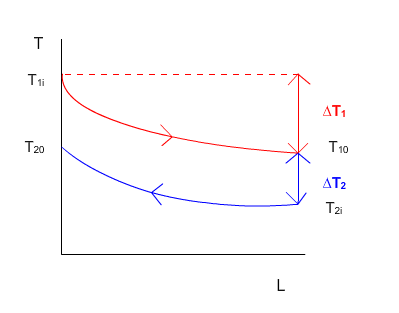
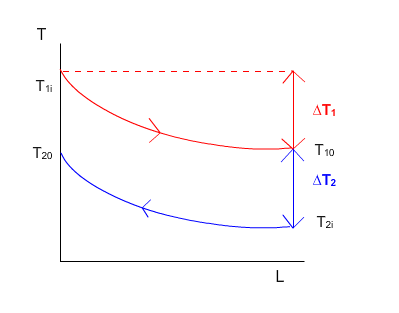
CONFIGURACIÓN A CONTRACORRIENTE
- Si C1 > C2 entonces ∆T1< ∆T2
- Si C1 < C2 entonces ∆T1> ∆T2
- Si C1 = C2 entonces ∆T1= ∆T2
CONFIGURACIÓN EN PARALELO
- Si C1 > C2 entonces ∆T1< ∆T2
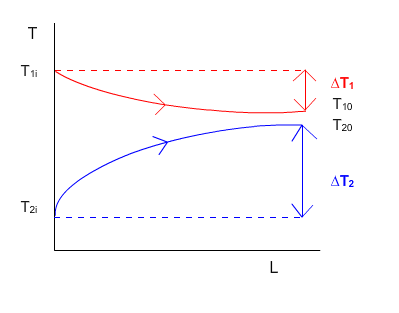
- Si C1 < C2 entonces ∆T1> ∆T2
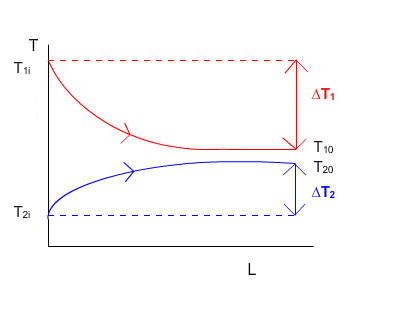
- Si C1 = C2 entonces ∆T1= ∆T2