


1. INTRODUCTION
The absorption is a unit operation of mass transfer where it contacts a gas mixture with a liquid solvent. So, we achieve mass transfer of one or more components from the gas phase to the liquid phase
The absorption can be physical, chemical or biological, that depends on how the gas is dissolved in the liquid or how as giving react new chemicals.
The circulation of fluids in these devices is generally counter current through the density differences. The liquid enters the top the device while the gas enters the base and up to this, as shown in Figure 1.1. The contact between the two fluids takes place on plates (discontinuous contact) or a filler (continuous contact). The amount of dishes and filling, depends on the height of the column and the concentrations that they want to achieve. In addition, we can relate the amount of plates for HEPT (Height Equivalent to a Theoretical Plate).

Figure 1.1: Schematic of an absorption column.
The solvents used are generally expensive, so they must be recovered. His election to the extraction is a complex problem, so there are different criteria. The ideal solvent is one that meets the following properties:
- The solute must be infinitely soluble in the extractor liquid.
- Non volatile.
- Non toxic.
- Non viscous.
- Non inflammable.
- Non make foam.
- Be stable.
- Non very expensive.
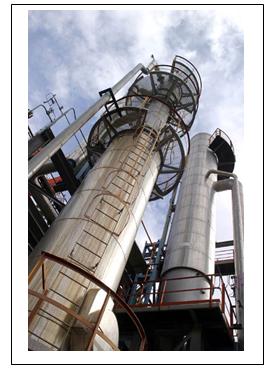
Figure 1.2: Example of an industrial column absorption.
Source: www.invap.net