


4. EXPERIMENTAL PROCEDURE
4.3. Practice 1: Loss pressure with air
Introduction
The purpose of this practice is to measure the pressure loss the pilot plant, from the operation from the compressor.
The pressure losses can occur in any industrial plant, in this case we want to explore pressure losses that occur in a gas absorption tower. This technique serves to separate a liquid through a gas. In this device worked with mixture of air with CO2 and liquid extractor is water.
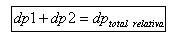
The loss of pressure inside the column are measured with two manometers tubular U-shaped, so that these gauges indicate the pressure differential. dp1 is the pressure difference between the top of the column to the centre of the column. And dp2 is the difference that occurs between the bottom of the column and the central part. To measure the total pressure to do the sum:
Mainly students must have clear what parts of the pilot and what does each instrument and valve operation. We can help from the following schemes:
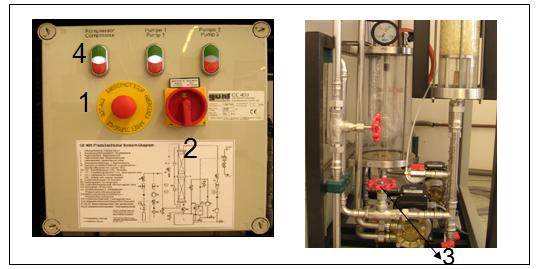
Figure 4.19: Distribution Box and situation of the valve adjustment level.
1- Emergency switch.
2- Main switch.
3- Valve Adjustment level of capacity of the column.
4- Double push the compressor.
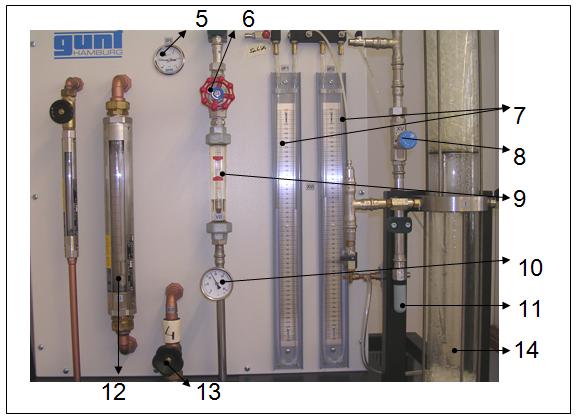
Figure 4.20: Panel elements.
5- Bourdon type manometer.
6- Valve adjustment of water.
7- U-shaped tube manometer
8- Valve adjustment pressure column.
9- Flow meter water.
10- Thermometer water.
11- Muffler, exhaust air.
12- Air flow meter.
13- Air valve adjustment.
14 - Column filler.
Material
Pilot plant absorption of gases.
Procedure
First, we must turn the device:
- Open the main switch (2) (make sure that the emergency switch (1) is not actuated).
- Close the valve adjustment for level of ability in column (3).
- Open the valve completely by adjusting the air flow (13) and the pressure adjustment valve (8).
- Set up the push button dual compressor (four) and adjust the airflow, the air valve adjustment (13).
Already we can begin to make the practice:
- Calibrate the air flow at 30 l/min by rotating the valve adjustment of the level of air (13).
- The Bourdon type pressure gauge (5) should always make a pressure of 0.5 bars, in the first experiment, 0.7 bars in the second and last experience must make a relative pressure of 0.9 bars. In order to stabilize the pressure valve was adjusted to the pressure column (8) (minimum gentle movements as movements produce large changes).
- Observe the pressure losses in the tube manometers (7), increasing the flow of air with the air adjustment valve (13) of 10l/min increasing until its peak, which not rise further increase the flow.
- Before taking the measurement of tubular pressure gauges (7), must wait a minute stop time for each new flow to stabilize the device.
It is very important to note the manometer pressure on, because this can never overcome the pressure of 1 bar, for safety issues.
The trial was performed in triplicate in both experience and complete the following table for the pressure of 0.5 bars, 0.7 bars and 0.9 bars:
Table 7.1: Loss of pressure in the column.
Gair (l/min) |
dp1 |
dp2 |
dp |
dp1 |
dp2 |
dp |
dp1 |
dp2 |
dp |
dp (average) |
20 |
|
|
|
|
|
|
|
|
|
|
30 |
|
|
|
|
|
|
|
|
|
|
40 |
|
|
|
|
|
|
|
|
|
|
50 |
|
|
|
|
|
|
|
|
|
|
60 |
|
|
|
|
|
|
|
|
|
|
70 |
|
|
|
|
|
|
|
|
|
|
80 |
|
|
|
|
|
|
|
|
|
|
87 |
|
|
|
|
|
|
|
|
|
|
Where dp1, dp2 and dp are mmH2O.
Once the practice is necessary to disconnect the device:
- Disconnect the compressor by pressing the button twice (4) to stop it.
- Disconnect all of the installation with the main switch (2).
Watch the video to see how they performed in practice:
Questions
1) What are the losses of load?
2) What is a column filler? And column plate?
3) What is a manometer? What is the difference between the relative pressure manometer and the pressure manometer tubular U-shaped?
4) Make a graphic of the pressure losses.
5) What differences can be observed between the experiences made at 0.5 bars, 0.7 bars and 0.9 bars?
6) Expresses the loss of pressure in different units and populates the table by three cases (0.50 bars, 0.7 bars and 0.9 bars).
Table 7.2: Loss of pressure in different units.
G(l/min) |
dP (mmH2O) |
dP (atm) |
dP (bar) |
dP (Pa) |
dP (mmHg) |
dP (Kg/cm2) |
0 |
|
|
|
|
|
|
30 |
|
|
|
|
|
|
40 |
|
|
|
|
|
|
50 |
|
|
|
|
|
|
60 |
|
|
|
|
|
|
70 |
|
|
|
|
|
|
80 |
|
|
|
|
|
|
87 |
|
|
|
|
|
|
7) Discuss the results.